Eighth Status Report on the Project 'KEEP THE READING QUEUE UNDER CONTROL', with this month the subtitle of What Happens When You Can't Even Remember to do a Plan....
As always - the last fortnight entries and The Next Up Reading List in full.
Successes
- Part of the reason for my tardiness in updates is that the refactoring project has been taking up a lot of time with 5,451 book entries and 1982 reviews now up on the new site. That's putting me into the "T" section, which means it's edging closer. After the refactoring the complete transfer of my account from Goodreads to Hardcover will become the major priority.
-
Other than that, the reading plans have been less plan more scramble but since the last update the following were ticked off from that update:
- The Deeper the Dead, Catherine Lea
- Mischance Creek by Garry Disher
- But a lot more than that was read - outlined in recent newsletters in July and September
- New releases are now being regularly listed in the newsletters
- Sort of limited myself at the library, sort of.
Failures
- There's just so many good books on the review queues at the moment I've had to decline even more that I'd love to read. They've been added to my wish lists about the place though.
- Didn't manage to get to an older book (AGAIN!)
- Need to keep the moving through the reading plan below (which went to hell in a handbasket in the last few months, but let's try again).
Plan
- Ripper, Shelley Burr
- A Divine Fury, D.V. Bishop
- Outrageous Fortunes, Megan Brown and Lucy Sussex STILL dipping in and out of this one at the moment. I suspect part of the problem here is I'm actually really enjoying it so I'm dawdling.
- The Wolf Who Cried Boy, Mark Mupotsa-Russell (EEEK!)
- Twisted River, James Dunbar (This should have been done by now - I'm hopeless!)
- Softly Calls the Devil, Chris Blake (Current read)
- Quintus Huntly: Botany, Royce Leville
- Death of a Diplomat, B.M. Allsopp
- The Mall, Michael Armstrong
- Lightning Mine, Philip McLaren
- The Final Chapter, January Gilchrist
- Dinner at the Night Library, Hika Harada
The last couple here are from the Library so they may jump the priority queue a tad.
As always, so so many good books, so few rainy days.
The Deeper the Dead

On the morning of her granddaughter’s first day of school, DI Nyree Bradshaw receives a chilling call: there’s been a double homicide on a private island in the Far North. One victim is the woman who inherited the island over her two brothers. The other victim is unknown.
As Nyree and her team begin their investigation into the murky labyrinth of greed, betrayal and bitter disputes that surround the ownership of the island, they make a shocking discovery: a search of the vicinity unearths the remains of a child who vanished twenty years before.
Old resentments and long-held secrets boil to the surface of the close-knit town, leaving Nyree to ask: Is the child’s killer on the loose again?
The Deeper the Dead, Catherine Lea
THE DEEPER THE DEAD is the third book in the New Zealand based police procedural series feature DI Nyree Bradshaw at the centre of a personal and professional storm. This is definitely one of those sets of books that would be worth reading in order, Bradshaw has a backstory which will allow readers to see the full picture behind the storm that is going on in her personal life, although you can definitely see the impact.
In the last book in the series Bradshaw found herself sort of guilted / sort of keen to accept custody of her very young granddaughter, whose mother had recently died. Her father, Bradshaw's son, is in jail but even before that she had a fractured relationship with him, and would be the first to admit that motherhood wasn't her thing, but police work, and solving crimes most definitely is. So taking on a young girl's care and welfare right now is quite the thing, especially as she's still flat out with cases, and the social workers are hovering. Not a great combination for Bradshaw's often tetchy temperament, especially as the current case is a double homicide on a private island in the Far North. An island that can only be reached by boat, which is wet going. And the weather's generally wet, and somebody's taking liberties with her crime scenes, and paying very fast and loose with the truth.
Victim number one of this double homicide is the young woman who owns this island, courtesy of the contentious will of her recently deceased father. Ownership which annoys the hell out of her two brothers, and continues to be a cause of considerable grief for the local Māori people, who hold the island sacred not least of all because of the ancient burial grounds. Burial grounds which reveal a much more recent body - that of a young child who vanished twenty years earlier. The second victim, also brutally shot and left where he fell, is initially an unknown, slightly mysterious young man who doesn't seem to have had a reason to be there, or much by way of connection to the island or the family at the heart of all this.
How Bradshaw handles this messy, complicated case, which has lots of aspects of a locked room about it, and then not, as movements to and from the island start to look very complicated, and way too suspicious for her liking, is a bit of a masterclass in juggling. Juggling all the leads and non-leads, juggling the information that is and is not forthcoming, juggling her granddaughter's needs and, it has to be said, demands as they both adjust to this new life. And juggling the expectations of everybody who has an opinion about her, her life, her family and the job.
She's a prime example of a woman who is forced into biting off more than she can chew and then chewing like hell. I really like the way this character is always vaguely chaotic but in control, just. Always aware of the things that are a bit off, a bit wrong, and more than a bit on the nose. Be it old or recent murders, crime scenes that turn to ash, locked rooms that aren't, past and present tensions, and people sending strange signals.
What she does from here - on the personal side is anybody's guess, as at one point I did think there was a glimmer of something on the horizon in terms of family and support, but then it moved away again. It will be interesting to see if Bradshaw decides to take to family problems as firmly, decisively and sheer doggedly as she does the professional ones.
Mischance Creek
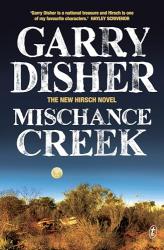
Hirsch is checking firearms. The regular police all weapons secured, ammo stored separately, no unauthorised person with keys to the gun safe. He’s checking people, too. The drought is hitting hard in the mid-north, and Hirsch is responsible for the welfare of his scattered flock of battlers, bluebloods, loners and miscreants.
He isn’t usually called on for emergency roadside assistance. But with all the other services fully stretched, it’s Hirsch who has to grind his way out beyond the Mischance Creek ruins to where some clueless tourist has run into a ditch.
As it turns out, though, Annika Nordrum isn’t exactly a tourist. She’s searching for the body of her mother, who went missing seven years ago. And the only sense in which she’s clueless is the lack of information unearthed by the cops who phoned in the original investigation.
Hirsch owes it to Annika to help, doesn’t he? Not to mention that tackling a cold case beats the hell out of gun audits and admin…
Mischance Creek, Garry Disher
Senior Constable Paul Hirschhausen and his small community are once again put to the test in the fifth of this outstanding rural noir series.
Paul Hirsch is out and about on his huge, drought-ridden South Australian beat doing firearms audits. Checking that guns are stored properly, the ammunition kept separate, not lying around on the back seats of utes as occasionally happens, and definitely not missing. A mandatory duty that always involves a lot of tea, slightly stale biscuits (the ones put away for ‘good’), and welfare checks. People out here are doing it tough – the drought is one of the worst ever, livestock are being culled in huge numbers, and everyone’s at their limits just trying to hang on. Not that Hirsch is expecting a lot of problems, it’s more welfare checks than anything else. Which is why he should have known something was up with Al Stanyer.
Hirsch brooded as he headed back the way he’d come. He could’ve stayed longer with the guy. What a life: far from the nearest town, shitty internet, bugger-all mobile phone reception. No bus at the end of anyone’s driveway out here, let alone a bank, doctor or dentist less than an hour away. If someone like Alastair Stanyer fell off a ladder or suffered from some other chronic painful or life-threatening condition, he might wait eight or twelve weeks to get an appointment.
Hirsch is a good rural cop, even if he ended up out here as punishment. He’s concerned about the people on his patch, a natural observer, and patient. Good at keeping in touch, being supportive, he knows when silence is needed. That’s not to say he’s a pushover, though, and he’s not convinced by his boss’s go-easy approach when one of the local no-hopers turned sovereign citizen starts throwing punches and pushing his luck.
He climbed to his feet, shrugged off offers of help and trudged, half-bent over, back to the police station. Got behind the wheel and called Sergeant Brandl as he set off sedately after yet another of the pissant small-town outlaws that were the bane of his existence.
Nothing is as simple as the search for Trent McRae, a man who thinks throwing punches at cops is fine, that the government and its agencies are illegitimate, that number plates are part of the conspiracy (although his suspect ute is fully registered and owned by his mum), and is a dab hand at all the crackpot ideas these people spout. He is deeply embedded in a couple of local fringe groups that seem to spend a lot of time and effort sending out threatening missives and standing around shouting pointless abuse at bank officials repossessing local farms. There are also the more dangerous aspects – violence and attacks on Hirsch are increasing, and weapons caches start appearing. Meanwhile, there’s illegal rubbish dumping, targeted road rage, and the council and its mayor making themselves desperately unpopular with everyone – not just the SovCitz bunch. Then an old accidental death / missing persons case has to be revisited as worrying connections and evidence are revealed.
There has been a steady increase in local crime fiction that addresses the sovereign citizen movement, although nothing quite like Mischance Creek. Disher, as always, is master of the art of misdirection, complicated scenarios made easy, and the slow, measured build. His deceptively laid-back storytelling style is enough to draw the reader into the action without ever making it seem obvious there’s something really big building here.
Hirsch followed Erica Woodhead back to her mother-in-law’s house, learned that Audrey McRae knew nothing about any shotgun, said goodbye to Sergeant Brandl and returned to Tiverton feeling crabbed and carping, full of gaps and absences.
The search for the now missing Trent McRae and Alastair Stanyer goes hand in hand with the firearms audit, the rubbish dumping and other more day-to-day policing tasks, alongside the personal – ongoing grief over the death of Hirsch’s father and his mother’s struggles to adjust. Then the discovery of a long-dead body, and the mystery of a dog found on the road, seem to be the tipping point. And as always, there are the little gems of observation that just nail Hirsch’s life in rural Australia, which also might hint at what’s to come.
He tossed his empty cup before shouldering through the hall’s heavy main doors. Into a warren of meeting rooms at the rear, and finally into a room normally reserved for the Country Women’s Association. Charles III reigned here, on the main wall – with his mother on a side wall, as if reluctant to cede him the throne.
Out on the edges, in communities where everything has been stripped away due to drought and years of government neglect, it’s easy and convenient to blame the fringe dwellers who latch onto a version of belonging that doesn’t fit conventional standards. But we are currently watching the playbook rolled out worldwide: the conmen, grifters, control freaks and evil people who get into communities and work them for their own ends. Be it influence or numbers, it probably comes down to distraction – when the zone is flooded with epic levels of noise, it’s hard to maintain focus on the main game – the corruption, the illegalities, the money and power grabs.
In the Hirsch series, Disher has always given voice to those who live a difficult, and different lifestyle. Battlers and the lost, people proud of where they come from, and desperate to maintain that connection into the future. The dodgy, the downright awful and the profoundly decent people who live in areas away from the cities and services. Those that thrive in that world, and those that hang on by the skin of their teeth. In Mischance Creek he’s also drawing out an explanation for why fringe dwellers are drawn to fringe ideals, and how easy those communities are to manipulate. Giving the reader something very different to consider when looking to explain or blame.
Ripper
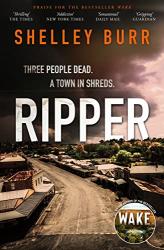
Gemma Guillory knows her once-charming town is now remembered for one reason, and one reason only.
That three innocent people died. That the last stop on the Rainier Ripper's trail of death seventeen years ago was her innocuous little teashop.
She knows that the consequences of catching the Ripper still haunt her police officer husband and their marriage to this day and that some of her neighbours are desperate - desperate enough to welcome a dark tourism company keen to cash in on Rainier's reputation as the murder town.
When the tour operator is killed by a Ripper copycat on Gemma's doorstep, the unease that has lurked quietly in the original killer's wake turns to foreboding, and she's drawn into the investigation. Unbeknownst to her, so is a prisoner named Lane Holland.
Gemma knows her town. She knows her people. Doesn't she?
A Divine Fury
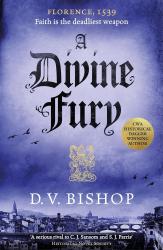
Florence. Autumn, 1539.
Cesare Aldo was once an officer for the city’s most feared criminal court. Following a period of exile, he is back – but demoted to night patrol, when only the drunk and the dangerous roam the streets.
Chasing a suspect in the rain, Aldo discovers a horrifying scene beneath Michelangelo’s statue of David. Lifeless eyes gaze from the face of a man whose body has been posed as if crucified. It’s clear the killer had religious motives.
When more bodies appear, Aldo believes an unholy murderer is stalking the citizens of Florence. Watching. Hunting. Waiting for the perfect moment to strike again . . .
Outrageous Fortunes
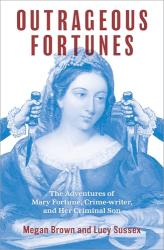
The gripping story of Australia's first female crime writer and her career-criminal son
When Mary Fortune arrived in Melbourne with her infant son in 1855, she was determined to reinvent herself. The Victorian goldfields were just the place.
After a time selling sly grog and a bigamous marriage to a policeman, Mary became a pioneering journalist and author. The Detective's Album was the first book of detective stories to be published in Australia and the first by a woman to be published anywhere in the world. Her work appeared in magazines and newspapers for over forty years – but none of her readers knew who she was. She wrote using pseudonyms, often adopting the voice of a male narrator to write about 'unladylike' subjects.
When Mary died in 1911, her identity was nearly lost. In Outrageous Fortunes, Megan Brown and Lucy Sussex retrieve Fortune's astonishing career and discover an equally absorbing story in her illegitimate son, George. While Mary was writing crime, George was committing it, with convictions for theft and bank robbery. In their intertwined stories, crime fiction meets true crime, and Melbourne's literary bohemia consorts with the criminal underworld.
The Wolf Who Cried Boy
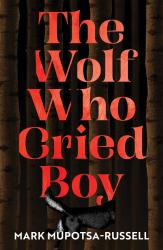
‘If you know where to look, kiddo, the world is full of magic and monsters.’
Six-year-old Henry believes his life is a fairytale. He’s a Star Prince, his mum is a Star Queen and they’re hiding from Henry’s father, the mysterious ‘Wolf King’.
When news arrives that his Grandma is gravely ill, Henry and his mum must take a road trip across the country and back into the Wolf King’s orbit. Henry isn’t afraid: he knows his magic powers will save them. But as the King draws ever closer, Henry’s world starts to fall apart. Who is the real baddie in his life? Who can he trust? And why don’t his powers seem to work?
In this astoundingly original story of heroes, villains and the messy reality between them, a world of violence and fear can be wildly funny and streaked with magic. Through its unforgettable narrator, The Wolf Who Cried Boy explores how cycles of violence, misogyny and corruption must be broken if we ever want our children to grow up free.
Twisted River

It’s not only the guilty who have something to hide.
When charity worker Cate and website designer Rory, a married couple in their thirties, return from their European holiday, they make a nightmare discovery. Their credit cards have been cancelled, their bank account has been emptied, and their phones and internet have been cut off. Their home in the New South Wales coastal town of Kiama has been rented out as a holiday let, and their dog and pet-sitter have disappeared. Meanwhile, Cate's work colleagues have received copies of her handwritten resignation letter, posted from Paris, filled with insults and lurid allegations.
The pain isn't over yet, not by a long shot. Someone has set out to destroy Cate and Rory Porter's lives - and their anonymous enemy's motivations are a mystery.
As the harassment ramps up, some likely suspects emerge. Is it the anti-vax campaigners who have already targeted them over Rory's website for dog owners? Or maybe a pro-Russian activist who objects to Cate's work with Ukrainian refugees?
To make matters worse, the local police seem suspicious of their allegations. Cate and Rory quickly realise the only way to reclaim their lives - and their beloved poodle cross, Iris - is to find their tormentor themselves. And it isn't long before things turn dangerous. Deadly dangerous.
Full of sinister twists and turns, dark humour and a fascinating cast of supporting characters from society's shadowy fringes, Twisted River will grip you until the final cliffhanger ending.
Softly Calls the Devil

From NZ cop-turned-novelist Chris Blake comes a dark, gripping, intricate crime thriller set on the South Island's wild and remote west coast.
Things are going well for Matt Buchanan. After some hard times, life is peaceful as sole-charge constable for the small, isolated settlement of Haast on New Zealand's wild West Coast. He's made friends among the locals, won their trust. He keeps their little world safe. And he's working in spectacular surroundings - the fierce Tasman Sea, the dense beech forest, the dark, cold swamps, the snowy Southern Alps.
But then his much-loved predecessor, Gus, is discovered beside a river with a bullet through his head. He'd been looking into a disturbing murder-suicide from 1978: the parents' bodies were found, but not their daughter's. Suspecting a darker truth, Matt is certain the answers can't be too far away in this close-knit community. How does former forest service ranger Liam, with his gang links, fit into the story? What about Joe, the alcoholic hermit whose knowledge and intelligence seem so at odds with his appearance and lifestyle?
Tensions rise, there are more deaths, people are threatened, memories surface of a cult that went horribly wrong ... Even when support arrives, Matt finds himself pursuing a case that's well outside his remit and is taking him to places he'd sooner not revisit. Also part of an increasingly terrifying situation are an over-curious journalist and a woman who could be someone special.
Matt has managed to shun his own demons, and is desperate not to face them again, but when confronted by the devil himself, he must take action, rediscover something of the person he was - for his own sake and to save those he loves.
This is the work of an award-winning master storyteller. Fast-moving, spare, compelling and rich in laconic humour, Softly Calls the Devil will grab you from the first page and refuse to let go.
Softly Calls the Devil, Chris Blake
In 2018 a novel barnstormed its way into the Ngaio Marsh Awards with THE SOUND OF HER VOICE making it to double finalist in both the Best First and Best Novel categories. At the time I remember thinking this is an author with such potential, and knowing it was a pseudonym, stood by patiently waiting to see if the author would be able to emerge, or would continue to write under that name. Chris Blake is that author, and his second novel, SOFTLY CALLS THE DEVIL is as good as that debut, continuing on with the intense, unsparing, and oh so realistic stylings of the first offering.
Following on with Matt Buchanan's career and personal story, for some context, from my review of the first book:
Every year the Ngaio Marsh awards for New Zealand crime fiction throw up an unexpected perspective, something brave and unusual that will set you back on your heels and make you think. For this reviewer, this year, that book was THE SOUND OF HER VOICE. In what's a combination of police procedural, and tragic police perspective, Detective Matt Buchanan has been in the job too long, and he's had a gut full of the nastiness of human nature. Unsolved murder cases haunt him, people being bastards haunt him, everything haunts him. He's bitter and he's well on the way to being twisted, and the murder of 14 year old Samantha Coates puts him on the trail of something big, and even nastier than he had even thought possible.
This second outing for Buchanan sees him back in uniform, in a small town, doing typical small town policing. And he's more settled, seemingly happier in himself, and what might seem like a demotion to some, is a chance to regroup, and rethink life and career, although the quieter world of traffic offences, kids behaving badly and the odd drug dealer, suddenly gets blown apart when his much admired predecessor in the job, Gus, is discovered beside a river with a bullet in his head. Gus had been doing a bit of digging around in an old murder-suicide in the local area, the parent's bodies discovered but their daughter never found. For all the world it looked like a violent and controlling father had inevitably flipped, and the missing daughter had always been assumed dead, as there had never been a trace of her. Matt's detective spider senses are tweaked though, and as much as he doesn't want to think it, it seems that there's been some rifts in this seemingly close-knit community, until more murders push him firmly back into his old detecting ways.
Refreshingly this novel doesn't make out that all the higher-ups and/or colleagues are idiots, and Buchanan isn't set up to be a lone wolf that saves the day. Rather the effects of his own trauma, and loss, are incorporated into the story of a decent bloke, trying to do the right thing, by a community of people he feels responsible for. He's also able to make some forward movement in his personal life, which very nearly doesn't work out, something that was surprisingly moving.
SOFTLY CALLS THE DEVIL is one of those crime novels that, on the face of it, is a standard police procedural, written by somebody who knows that world back to front (Blake runs the Behavioural Science unit of the NZ Police in Wellington). He's also incredibly skilled at making it all about the story, not the process, and at no stage does this read like a training manual, or a self-help treatise.
Instead, this is a fast paced, nicely twisty mystery with a particularly nasty killer at the centre of it - killing to protect themselves from their past, as is so often the way. There is also something very real about the way this story addresses the complications and trauma of an ongoing policing career, and how the connections with other serving officers who understand, and a community that supports and sympathises can be the difference between burn out and thriving.
Told in a brisk, no nonsense tone that is richly interlaced with laconic humour, and compelling observation, SOFTLY CALLS THE DEVIL delivers and then some on the promise of THE SOUND OF HER VOICE. Bring on the third novel please.
Quintus Huntley: Botany
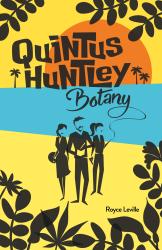
When his sole poetry collection is found in the case of a gruesomely murdered violinist, the police think Huntley did it. But he's innocent, and the best way to prove it is to find the killer himself.
Variously assisted by Detective Everest, PR writer Aphra Massey and octogenarian computer hacker Henrikson, Huntley tries to solve a series of deaths (and one coma) that result from plant poisonings. While he has no idea what he's doing, his ability to see stories, identify motives and predict endings enables him to zero in on the "weed killer". For Huntley, all the answers are in the stanzas.
But there are bigger pieces in play, including a new subdivision being built on Perth's southern wetlands, drug deals aplenty, a police force that looks out for themselves, a politician intent on making WA a separate country, and Huntley's loose-cannon teenage daughter Verity. Can Huntley put all the pieces together to find the killer before the killer finds him?
Quintus Huntley: Botany, Royce Leville
I was having a bit of a chat with a fellow lover of crime fiction (hi Gavin) on BlueSky who copied me in on an instagram post that outed the author of this novel as Campbell Jeffreys, a writer with a diverse background in literature, media and film, and the author of (amongst other things) a thriller entitled BALACLAVA which is now on the TO BE READ teetering piles. Because, if at any point you think that QUINTUS HUNTLEY: BOTANY (written under the author name of Royce Leville) sounds unlikely, park the concerns, grab yourself a copy and get stuck in.
This is the sort of dry, humorous, social commentary that is so far up my alley, and pitched perfectly, that it very nearly made me turn off the cricket so I could concentrate. It's the story of poet, and all round endearingly slightly, maybe not really so, hopeless case, poet come university lectuter Quintus Huntley (the name comes with commune territory); ex-punk-rock drummer, now detective Elenore Everest (now desperately want a YouTube Music channel for Salty Lemonade); PR writer come poet at heart Aphra Massey (who works for the wrong side and is all too aware of that); and octogenarian EV driver and computer hacker Henrickson (now there's a man that could carry a novel in his own right!). Great cast in other words, I mean even Everest's sidekick - of nepo-baby fame, mid-20's for goodness sake, and definitely slightly dodgy Justin Booth is okay. In the small doses allocated to him herein.
The plot revolves around a series of deaths (and one coma), all connected by the plants that are used to poison each victim. Each plant is a tad on the obscure side, and the methods of death (and coma) just odd enough to go down as one murder, one suicide, one accident and one natural causes (I think that's the combo, I was laughing a lot by then and yes I know that sounds ... odd), but the plot was clever, and funny, and nicely twisty and best of all not everything gets resolved the way it should, and the higher-ups stick the oars in when they should be minding the sinking ship, and the caravan living lifestyle fits with the idea that Huntley grew up in a very eclectic family on a very hilariously established commune, and there's connections between the Perth of the current day - all developers at the cost of environment, and populist opportunistic politics, and the drug wars behind some of it, and the political machinations over WA becoming a country in its own right, and the money, corruption and influence. To say nothing of who is sleeping with who. You might want to make notes, it all gets very complicated, but never confusing, it gets very serious, but never loses the sense of tongues firmly pressed into cheeks, and the poet(s), the cop who was a punk, and the old man with his incontinence support, his book shop and his hacking skills, all combine to save the day. Sort of.
Right from the get go I loved QUINTUS HUNTLEY: BOTANY. It worked on the humorous level, it worked as a piece of crime fiction out to solve some crimes, and it worked as a bit of sly social commentary. It worked because the cast of characters is brilliant, but there was more than enough plot to allow them to shine, and it worked because it was quirky and very unexpected and I now I want the next book in the series.
Death of a Diplomat
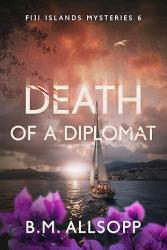
A VIP diplomat is missing in Fiji.
Detective Horseman’s dream turns into a nightmare.
At two o’clock, the Australian High Commissioner, Her Excellency Helen Armstrong, will open a hostel for the Junior Shiners, a rugby team for Suva’s street kids. As DI Joe Horseman is the Shiners’ driving force, the ceremony is his dream come true. But Ms Armstrong fails to turn up. Seriously troubled, Horseman instigates a Missing Person investigation at once. And he leads the search himself.
When Helen’s body is found, Horseman vows to solve the mystery of her death despite obstruction from officialdom. As he digs into Helen’s life in the elite circles of Suva, he uncovers dark criminal networks reaching to the highest in Fiji.
Death of a Diplomat is the sixth novel in the acclaimed Fiji Islands Mysteries series. If you enjoy gritty police procedurals set on tropical islands, this bizarre crime story is for you.
Download Death of a Diplomat to join DI Horseman in cracking his toughest case!
Death of a Diplomat, B.M. Allsopp
The sixth novel now in the Fiji Islands Mystery series, DEATH OF A DIPLOMAT has a lot of twists and turns in the personal sides of the lives of DI Joe Horseman and his team. Because of that you really would be best to dip into the series a tad earlier than this one, just to get a taste for the day to day life of a Fijian Police DI, and the sorts of cases that he and his team have to deal with. To say nothing of an unsupportive, mildly bats boss, and Horseman's beloved Junior Shiners rugby team.
Rugby looms largish in these storylines as Horseman was a very famous Fijian rugby player before injury put pay to that career and saw him return to the islands, taking up a career in the police force. I say largish in that his fame is a way into a lot of situations, but the "rugby" talk itself is mostly confined to the recognition and accolades heaped on Horseman by the people he encounters. He is also supported by a close and hardworking team of police colleagues, and a close relationship with many people who form the periphery of lots of his investigations.
It is one of those series that has been building a world in which it inhabits, and the sense of place, and culture is strong in these. The food descriptions are all too frequently mouth watering, the locations for some of the cases glorious, and the culture, and way of the people shines through. There is a bit of Fijian language dotted throughout the dialogue (with a glossary helpfully included), but there is never anything that can't be sussed from the context, and somehow those greetings, and exclamations make the feel of the novels even more authentic.
This time around there's a weaving in of Horseman's extracurricular activities - a rugby team made up of street kids in dire need of support and guidance - and the untimely murder of the Australian High Commissioner to Fiji, Her Excellency Helen Armstrong, who was immediately noticed as missing when she didn't arrive to open a hostel built for the street kids with her assistance. This makes Horseman's investigation doubly personal, not only did he know this victim, he admired her and he would always be grateful for her support to help his beloved Shiner kids (many of whom earn a paltry living on the streets, shining shoes for people). (There is an amusing aside about the number of homeless shoeshine boys in a country where most people wear sandals at the most...)
The resolution of the case, as is often the way with this series, comes down to excellent forensic work, dogged ticking off of investigative points, and a sixth sense about what is and isn't right about all of this. (And a lot of tea drinking!) There's also a subthread here on the smuggling of drugs which serves as a great way to bring team member, now promoted and working on another island, Susila Singh back into the action, and into the world of favourite coffee shops, food and the team.
I've been a fan of this series since the early novels and it's always improved with each new book. DEATH OF A DIPLOMAT is a complex investigation, combining the complications of dealing with diplomatic restrictions and relationships between countries, but always pulling everything back to the lowest common denominator. What people do when they believe they have no choice. On the other hand, it looks like Horseman and Singh have some big decisions to make - some of which they do, some of which make you wonder what next.
The Mall

Curtis Ryan is ambitious and optimistic, navigating the challenging world of commercial real estate in Sydney. His career has been on a steady upward trajectory, paralleled by a glamorous social lifestyle with his stunning girlfriend.
However, when a pivotal deal collapses, Curtis faces mounting pressure from his tyrannical boss and the demands of their a high-profile billionaire investor, corporate executives with opaque motivations, and a shady developer with underworld connections.
As the clock ticks, Curtis unwittingly uncovers a fraud that could shake the foundations of his company. Balancing relentless cold calls, tense negotiations, and a crumbling personal life, Curtis must now unmask the criminal within his team.
The Mall peels back the curtain on the hidden world of shopping centres and dives deep into the little-known domain of the retail leasing agents. With sharp dialogue, complex characters, and a relentless narrative drive, this first book in The Shopping Centre Chronicles promises to captivate readers who enjoy stories of ambition, intrigue, and the high-stakes tension of modern business.
The Mall, Michael Armstrong
Whoever said "write what you know" to Michael Armstrong got their message through loud and clear. THE MALL is set in the world of high finance commercial real estate, and features the wheeling, dealing, and dodging goings on of that, as well as the life and times of an ambitious young Curtis Ryan.
The blurb is worth reading on this one, with the final paragraph worth using as the kicking off point for this review:
The Mall peels back the curtain on the hidden world of shopping centres and dives deep into the little-known domain of the retail leasing agents. With sharp dialogue, complex characters, and a relentless narrative drive, this first book in The Shopping Centre Chronicles promises to captivate readers who enjoy stories of ambition, intrigue, and the high-stakes tension of modern business.
I will confess a decided preference for the hidden world of shopping centres and the domain of retail leasing agents to remain hidden. Having said that, the dialogue is indeed sharp, the characters complex if not unexpected, and the narrative powers along at a rapid clip. There is, however, a lot of real estate talk which may or may not cause some readers to glaze over. There's also a hefty amount of what's the glamorous girlfriend up to, and a lot of social lifestyle that was very very inner city focused as you'd expect.
Unsurprisingly given we're talking the world of big money and dodgy characters, the crime at the centre of THE MALL is fraud, and it turns out that Ryan is the one who can unmask the criminal within his own team. All despite a boss who is a bit of a tyrant, a very dodgy developer with underworld connections, suspect corporate executives, and a weight chucking about billionaire investor. All whilst dealing with some very hefty work pressures and expectations.
Needless to say a world away from that which this reader would ever want to occupy, THE MALL drew a vivid picture of the world it inhabits, with a plot that was a bit different from your standard crime fiction offering.
Lightning Mine

A gripping thriller from an award-winning author
Under a cloak of secrecy, Aaron Shoemaker was sent to Australia to search for commercial mineral deposits – no one could have predicted what his discoveries would unleash. He was used to the secrecy and threats of industrial espionage but was totally unprepared for Aboriginal mystical spirits and thousands of years of cultural customs.
Two elders watch Shoemaker’s helicopter land near their most sacred site and they immediately turn to their trusted advocate, Jarra Mariba, for help. Jarra understood commercial ploys, but how would he cope with murders, political maneuvering and mercenaries.
As the body count rises, they all wonder if the Lightning Mine will go ahead … and if so at what cost?
The Final Chapter

Benjamin Stevenson meets Nine Perfect Strangers in a story about writerly ambition, self-discovery and - of course - revenge. Sharp, fresh, bold, thrilling and gothic - gripping suspense from a spectacular new Australian talent.
An opportunity a writer would die for ...
Desley Barron is ready to prove her doubters, and herself, wrong about her flagging writing career. She's won a spot at an exclusive writing retreat in the Blue Mountains. Only instead of feeling creative, Desley finds her insecurity increases while the ghost stories about the house have her jumping at shadows.
This secluded house is the last place anyone will think to look for high-profile author Colette Halifax, which is perfect as she hides from a looming scandal. Unfortunately, someone here is threatening to ruin the one part of her life that isn't already a shambles.
Meanwhile, Maia McKenzie has plans that don't involve writing at all. She's schemed to ensure the one person she wants to see is here - the man who almost killed her mother.
All have a secret. All will do anything to keep it hidden. And they're not alone. The retreat is perched on the edge of a forest steeped in the horrors of Australia's worst serial killer - and no one knows just who is watching.
When a storm unleashes its fury and they're trapped, a body is left in the snow ... and any one of them could be next.
Dinner at the Night Library
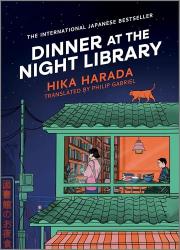
A whimsical, charming novel about a mysterious library in Tokyo that opens after dark, following the employees who bond each night over special meals inspired by the books on the shelves
The Night Library on the outskirts of Tokyo isn't your ordinary library. It's only open from seven o'clock to midnight. It exclusively stores books by deceased authors, and none of them can be checked out -- instead, they're put on public display to be revered and celebrated by the library's visitors, akin to a book museum.
Otoha Higuchi, the newest employee, has been recruited to work at the library by the mysterious anonymous owner. There, Otoha meets the other staff, comprised of former librarians and booksellers who, like her, have been damaged in some way by the rocky publishing industry – yet none of them have ever given up on their dedication to books.
Night after night, Otoha bonds with her colleagues over meals in the library café, each of which are inspired by the literature on the shelves. When strange occurrences start happening around the library that may bring the threat of closure, it forces Otoha and the library staff to rethink their entire relationship with work and what they really want in life.
Dinner at the Night Library, Hika Harada
Can't remember quite how this novel piqued my interest, but I do love whimsical, gentle Japanese crime fiction and the library had a copy so...
First up, this was a fabulous read, full of whimsy and gentle humour, with a fantabulous setup: a library that only opens after dark, never allows patrons to check books out, and consists entirely of the collections of books that were once owned by now deceased Japanese authors.
The employees are also an eclectic set of people - former booksellers and librarians who have had rocky past careers, all of whom have come to work in the library after an approach from the mysterious and anonymous owner of this magnificent building. Most employees have also been given accommodation in a nearby set of small apartments, and it's between their home lives in such close proximity, and such an odd, enclosed working environment, where even the meals provided by a small onsite cafe and an eccentric chef, are related to well known books, that everyone is given a chance to come to terms with what they do, and who they are.
The Night Library is part museum, part collection library, with patrons who pay to come and sit with the books, a security guard, a manager, and a very different little set of employees, all of whom are not just grateful for the job, but come to be quite passionate, or they find a pathway to something else.
Whilst this is mostly a story about people, and life circumstances, there are also a couple of minor mysteries dotted throughout the story - the biggest of which is the identity of the anonymous, and seemingly infinitely wealthy owner of the complex, one of the smaller ones being the discovery of many books that don't belong to any of the collections, which causes great consternation. At the centre of the tale is a very new employee, Otoha Higuchi, and given the story is about her coming to terms with the job, and the environment, it's a journey of discovery for the character, and the reader. The moral of the tale appears to be that you must do what you love, and seek out the things that bring you joy, what you really want to do with your life, regardless of what other people think.
Or it could be something completely different - the joy of novels like this one is that you're free to immerse yourself in this strange little world and come out the other end thoroughly beguiled, or utterly confused.
Add comment