
This update is bought to you a day early because of the Easter Break which, this year, I hope will be focused on reading, in the spirit of the Norway Easter Crime Tradition. Fingers crossed the weather co-operates and nobody sets fire to anything for a change.
#JustFinished
What You Don't Know by Sandi Wallace
The Strength of Old Shale by Kirsty Powell (2026 Ngaio's)
#CurrentlyReading
The Girl from Sarajevo by Stef Harris (another from the 2026 Ngaio's list)
Bella Donna by Jill Johnson (2026 Ngaio's)
The Afterlife of Harry Playford by Steven Carroll (library book - may have to queue jump)
#NextUp
Lucky Thing by Tom Baragwanath (2026 Ngaio's)
A Beautiful Family, Jennifer Trevelyan (2026 Ngaio's)
The Ledge by Christian White (because I can see it from where I'm sitting most days).
Parrot Heaven by Jessica Howland Kany (because I loved the first one - A Runner's Guide to Rakiura)
What Rhymes with Murder by Penny Tangey
Red River Road by Anna Downes (after a massive nudge from somebody whose opinions I value)
The Writers Retreat, Victoria Brownlee
What You Don't Know

Home on a secluded island should be safe… but isn’t.
Tess and Joe are living the dream on Wyeebo Island. She writes children’s mystery books and loves having her husband home on weekends. He has it all, a travelling job he excels in and a wife he adores.
But how well do they really know who they’re married to?
A prowler in Tess’s neighbourhood triggers trauma over her best friend’s unsolved death – and dread of history repeating. Tess does odd things she can’t remember, and Joe acts cagey. They each have secrets that converge with the abduction of a young local woman.
Who can they trust when they don’t trust each other, or themselves? With nobody and nowhere safe, can Tess stop what she doesn’t understand... or will somebody else die because of her?
What You Don't Know, Sandi Wallace
A stand-alone novel from Australian author, Sandi Wallace, WHAT YOU DON'T KNOW is set on a secluded island where Tess works at home, writing children's mystery books, and her travelling husband returns to on weekends from the job he loves, to a wife that he adores. It seems, to all the world, like the perfect life, enough neighbours to create a sense of community, enough distance to create a buffer, a sense of sanctuary, even a goofy chocolate labrador dog. A feeling shattered by sightings of a prowler, triggering unresolved trauma for Tess - her best friend's death was never explained, and suddenly Tess is doing all sorts of odd things she can't explain, and Joe seems to be hiding something. Then a young local woman is abducted and what seemed idyllic suddenly starts to look very shakey indeed.
The use of secrets and past events to set up a present day threat isn't new territory in crime fiction, but WHAT YOU DON'T KNOW uses them, and the isolated, almost locked room setting, to good effect. The inclusion of electronic stalking and hijacked communication is also a very current day and real threat, which creates a sense of immediacy and overall / overwhelming threat here that invokes such confusion in Tess, and therefore becomes increasingly unsettling - the idea of who you can trust when everything suddenly gets very odd is palpable here.
The setting is well invoked as well - small community / small island and the immediacy of the weather and the remoteness is cleverly done, as is the author's own knowledge of the solitary life of an author, made even more stark by Joe's long absences from home. His reasons for being away - a salesman on the road selling environmentally-friendly insulation is plausible, but on the home front there's a neighbour who has suddenly started behaving oddly, and some weird in house things - passages of text appearing in her work in progress, things moving / going missing / adding to the presence of that stalker, meaning a constant ramping up of the pressure, tension and fear. And, in something that is again all too believable, a lurking property developer, pushy and unpleasant.
Meanwhile there's Kathy, held captive for nearly forty years, keeping her feelings on scraps of paper, determined to never let her much older captor break her spirit.
So a lot going on, much of which has Tess as the obvious connection, which will leave the reader really wondering about her sanity, whilst also open to questioning Joe's commitment to his wife, or maybe there's something dodgy about the neighbours and the island in general, whilst always there's the thought of who on earth Kathy is in the background.
Whilst it could all sound very busy, the pace is high, and events, and introductions to a lot of people and situations roll out quickly, with the reader never struggling to keep track of who or what although why doesn't become clear (as you'd expect) until you get to the ending of what was a very believable, tension packed ride of a novel.
The Girl from Sarajevo
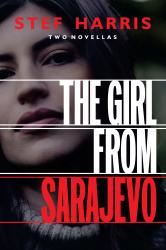
THE GIRL FROM SARAJEVO
Young and beautiful immigrant Katia will do anything to become a novelist. When she encounters her neighbour, a once famous Croatian author, she embarks on an audacious plan to represent Dragan’s new novel as her own. Weaponising her sexuality, she enters into a cynical twisted affair with the aging wordsmith. But Dragan holds a dangerous secret that may destroy them both.
THE OTHER JASMINE
Mail order bride Wong Ji Li travelled all the way from Ningbo China to marry a wealthy man, only to find herself a virtual sex slave, imprisoned on a derelict farm. Her new husband Darryl is a giant man-child still under the thumb of his powerful mother. Wong Ji Li discovers she is not Darryl’s first victim. She must find the courage to escape her predicament or face the same fate as the other Jasmine.
Bella Donna
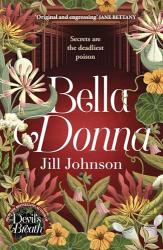
SECRETS ARE THE DEADLIEST POISON
Eustacia Rose is done with murder cases. She's ready to settle down with her partner, Matilde, and focus on her work at the university. To live a normal life.
But then along comes a case she can't resist investigating - because this time, the murder victim was poisoned with hemlock, one of the plants stolen from Eustacia's illicit garden of poisonous plants. And Eustacia is not the only one desperate to retrieve her lost the beguiling trader of rare plants, Zsa Zsa, and rival university professor Hutchins are on the trail, too, not to mention the dangerous criminal gang determined to keep hold of the lethal plants.
The stakes are higher than ever for Eustacia. Because if she cannot save her plants in time, there will be more deaths - and this time, the blood will be on her hands . . .
Bella Donna, Jill Johnson
In Jill Johnson’s new novel, Professor Eustacia Rose is done with murder – it’s time to settle down with the love of her life, Matilde.
For anybody new to this series, which began with Devil’s Breath, Professor Eustacia Rose is the Head of Botanical Toxicology at University College. An expert in rare and highly poisonous plants, she’s brilliant, neurodivergent, gay, and a very complicated person to be around. Luckily, her partner, Matilde, is patience personified, even if she is a little bit obsessed with home decorating – something that’s destined to discomfort Rose to the point of explosion, unless her failure to grasp the central premise of ‘done with murder’ drives Matilde back to Spain permanently first.
But I am not most people. I am Professor Eustacia Amelia Rose, Head of Botanical Toxicology at University College London. And I had chosen to walk through the arched entrance, and across the reception to the glassed-off area. I wasn’t here to make a complaint, or to report a crime, and I certainly wasn’t here to hand myself in. I was here because I’d received a phone call from Detective Chief Inspector Roberts not fifteen minutes before and it was imperative I find out why.
However, DCI Roberts – and others – seem to be more interested in finding a reason why they shouldn’t look into the death of a man from a plant toxin called gamma-coniceine. Despite his superiors’ tendency to regard Roberts and Rose as experts in the field of plant toxin murders, and Roberts’ reluctance, all hesitation is lost when Rose identifies the source of the poison as hemlock – one of the dangerous plants previously stolen from her rooftop garden – and the victim as somebody she’s recently been in very close contact with:
The man stepped out into the passageway. He was wearing a leather apron, the bulging pockets of which I assumed contained gardening gloves, secateurs, twine.
This series is currently made up of three novels: Devil’s Breath, Hell’s Bells, and Bella Donna, with a fourth, Blood Root,due for release in June 2026. It’s also a series that would definitely benefit from reading in order. Professor Rose is a complex woman with simple tastes and an incredibly complicated background. Raised mostly by her single father, whom she worshipped, she still wears his tweed suits and watch, and lives in the apartment they shared.
In the earlier novels she cared for a highly illegal and very dangerous rooftop garden full of illicitly obtained toxic plants, while also performing her role as Head of Botanical Toxicology. Her mother has also returned to her life after abandoning the family when Rose was very young, a relationship as fraught as you’d imagine after all these years. Roses’ neurodivergence manifests as extreme intelligence and laser-like focus on the things that interest her, but little ability, or desire, to interact with others – until things she started to see from her rooftop garden tempted her out into the world, and into the path of murderers with unique ways of killing. Many of these traits appear to circle back to her relationship with her father, and the world he built for his much loved daughter.
I lifted my eyes to the sky as a wave of shame rushed through me. I’d suffered panic attacks since childhood and only Father knew how to calm my racing heart, slow my rapid breathing, soothe away the panic. Only he knew that taking me for walks through the Oxford countryside, pointing out the different plants, teaching me their common and Latin names, patiently telling me about their properties, their toxicities, their folklore, would, as he’d called it, restore equilibrium. But Father was dead.
Her collection of rare plants was stolen as a result of one of the cases she was helping the police to investigate, and the latter novels have included the search to recover individual specimens, some of which appear to have fallen into the hands of organised crime gangs. It’s this background that readers may feel more comfortable understanding, as the links between Rose and the activities she walks straight into all come back to her single-minded determination to recover her beloved plants while not annoying her beloved Matilde – although that bit of human interaction is much much harder for her to deal with. To say nothing of how Rose deals with a new character on the scene – the exotic Zsa Zsa
Matilde let out a soft hum.
‘Should I be jealous?’
‘Of what?’
‘Of you finding a pretty plant for Zsa Zsa.’
I let out a guffaw.
‘That won’t happen.’
‘Why not?’
‘Because she isn’t pretty.’
On the contrary, Zsa Zsa is a very attractive and, it turns out, ruthless woman who is on the same trail as Rose, trying to recover some particularly dangerous plants. Meanwhile Rose and Matilde are navigating the complications of a relationship where one partner is trying hard to fit in with another determined to live their own version of a normal life. Meanwhile DCI Roberts is mostly trying to stay alive, and to stay out of the path of Professor Rose, who he admires and is driven insane by in equal measure.
The balance of Bella Donna is skewed slightly towards the personal relationships, with a number of threads from earlier novels being knitted into this story of organised crime and toxic plant murder. The initial victim, an intermediary that Rose had been in contact with before his death, has died very mysteriously, with no obvious ingestion of the poison that killed him. Subsequent murders have a more obvious cause, but the connections are vague, and the involvement of the gangs across multiple countries insidious and hard to unravel.
Nearly as hard to unravel, it turns out, as love and life. Something Professor Rose is continuing to struggle with, even as she proves herself again to be an intuitive solver of crimes.
The Ledge

When human remains are discovered in a forest, police are baffled, the locals are shocked and one group of old friends starts to panic. Their long-held secret is about to be uncovered.
It all began in 1999 when sixteen-year-old Aaron ran away from home, drawing his friends into an unforeseeable chain of events that no one escaped from unscathed.
In The Ledge, past and present run breathlessly parallel, leading to a cliff-hanger nobody will see coming. This is a mind-bending new novel from the master of the unexpected.
The Ledge, Christian White
Christian White is an author who can always be relied upon to come up with an unusual scenario, great characters and a rollercoaster plot that will keep readers enthralled, and vaguely baffled from start to finish.
Told in dual timelines, THE LEDGE is a story that spans childhood friendship and old secrets haunting very different adult lives. Twenty five years before the current timeline of this novel, Justin, Aaron, Chen and Leeson were typical young boys growing up in a small regional town in the Victorian mountains. They ride their bikes, wonder about girls, all pretty normal, until a tragic chain of events that haunts them into their adulthood. An adulthood that for a few of them is very complicated.
Dual timelines are nothing new these days, and they come with varying degrees of success. This one is slightly on the jarring side, told as it is from a single point of view, with the constant suspicion that when the reader is inside one head, the view could be skewed or deliberately obfuscating.
To be fair though, that observation only came to this reader at the end because the suspense is palpable in THE LEDGE, as is an overwhelming atmosphere of dread and "something not quite right". Starting at the opening stanzas when the narrator of the story seems almost reluctant to reveal his separation from his wife and family complications, and the reason why, after the discovery of a long dead body in the bush, he is compelled to return to his childhood home town of West Haven.
The dialogue is, however, spot on, right from when the four young boys were firm friends, to the current day awkwardness of three re-uniting. From the interactions with ex-wives, old friends, and people from the town who remember them, and what's known about the events from their past. There's also a clever use of place - from the small town - to the railway line - leading to a hidden path to The Ledge. A rocky outcrop known to the locals, used for parties, and more sinister events, The Ledge hangs over the town, and the boy's lives like a living / breathing entity. White also uses these places - the town, the ledge, the railway line alongside the boys, then and now, to explore themes of friendship, loyalty, masculinity - positive and toxic, and the way that young men who grow up in small towns with tragedy can so often find it a struggle to deal with that.
Having said all of that White's not known as "the master of the unexpected" for no reason and even coming to THE LEDGE expecting something, looking for it even, the twist, when it arrived, came utterly out of nowhere.
I don't know why I always seem to be behind with reading Christian White's books - every single time I finish one I kick myself for not jumping it to the top of the queue immediately on release.
Parrot Heaven
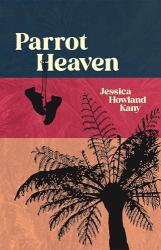
BDTH! The Foveaux Fisherman Facebook page posts this acronym to advise Rakiura Stewart Islanders to ‘batten down the hatches’ before severe weather events.
New Zealand’s southernmost librarian Maudie Sanderson reckons this warning could be applied to her life in general these days.
Haunted by a parrot and falsely accused of soliciting d**k pics, Maudie navigates a minefield of rabbit holes and mental health crises as she struggles to be a fit and proper person in a pandemic-hungover world. Sidelined by buggered knees, the avid runner needs projects to maintain sanity.
Island life keeps her busy. Maudie is drawn into an axe cult, scraps with the preschool teacher, discusses The Epic of Gilgamesh in a jailhouse book club, and mis-manages a community astronomy course. When a shocking crime wreaks havoc on her family, she dons her deerstalker cap and dives into the investigation.
All the while, Maudie feels a growing kinship with the ancient desert king Gilgamesh, as the words from 5,000-year-old clay tablets guide her through life’s myriad of mysteries.
Parrot Heaven, Jessica Howland Kany
Because I'd read (and loved) A RUNNERS GUIDE TO RAKIURA by Jessica Howland Kany first I was prepared for PARROT HEAVEN. Which was handy because the slightly chaotic styling of the first novel is ramped up even more in this one - to frequently hilarious levels, although anybody new to this series may just wonder what the actual... .
If you're in that space, stick with it. This is crime fiction (in that there is some crime sprinkled throughout), but it's mostly storytelling about a place, some people, and a life that's, well different, probably doesn't come close to explaining it.
If you need to know more about who Maudie and Vil are, along with many of Vil's extended family, and the slightly batty residents of New Zealand's Rakiura Stewart Island, as seen through the eyes of outsider Maudie, then I'd strongly suggest that you check out what details you can glean from the first book. Whilst it won't be necessary to have read the earlier to launch into this second outing it may help, but then again, if you're the sort of reader that can't settle into chaos then nothing may help.
Short synopsis first - Maudie and Vil, now married, with a couple of young kids are getting on with small island / wild weather / mad community life quite well - albeit haunted by the death of their beloved parrot, and the havoc wreaked by Bathmat the goat. Life with a toddler is proving somewhat of a challenge that Vil mostly meets by sitting in a bathchair on the lawn looking at nothing in particular while Maudie texts him little gems like "is our girl batshit?", and the goat eats his phone, and his divorced parents remarry treating their guests to a wedding cake full of wormholes (you'll have to read the book), and his father (referred to throughout as Dogbox) is charged with murder.
Of course nothing's as simple as a bit of a murder charge (which also comes such a long way into the book that you might be wondering if this thing has been mislabelled by then), there's also an axe cult, The Epic of Gilgamesh, a particularly mismanaged community astronomy course, and the local pub quiz. Meanwhile as the murder (yes it is sort of still in there), threatens to wreak havoc on the family, Maudie steps into conduct her own investigation - buggered knees, missing prosthetic toes (first book - or you'll work it out here), and surprisingly literate, but frankly vaguely batshit crazy, toddler daughter, son, fisherman husband Vil, mother-in-law, madhouse community and all.
Written in a slightly chaotic style of short paragraphs, flow shifts, funny observations, lunatic conversation ploys, mad people and crazy goings on, PARROT HEAVEN is so far from traditional crime fiction that familiar territory is so much further than a packed lunch and waterbag will take you. This is the journey is more important than the destination reading, although to be honest the journey seemed to have thrown the map and compass into the nearest tidal pool. All of which matters not a jot - get the sense of humour and gentle love for this community at the core of these books, and a reader is in for a hell of a ride.
What Rhymes With Murder?
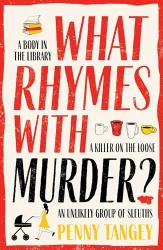
When exhausted new mother Frida attends Baby Rhyme Time at the local library, she feels a sense of purpose that has been lacking in her anxious, apartment-bound, sleep-deprived life. But at the end of the session a piercing scream is heard, followed by the thump of a body, and the library becomes a crime scene.
Before long, Frida finds herself part of an unlikely group of sleuths investigating the murder. Between gossip and cups of magic at their local cafe, they are too busy having fun to realise how close they are to danger . . .
What Rhymes With Murder?, Penny Tangey
Featuring new mother Frida, WHAT RHYMES WITH MURDER? is a cosy, baby focused story about a body in a library, with a bit of social commentary along the way.
The basic premise is that Frida attends her first ever session of Baby Rhyme Time at the library in her inner Melbourne suburb - a trendy place with cafe's / come local stores and a hefty quota of women pushing those huge prams that seem to be all the go nowadays. As the session ends with a group of new parents, including Frida and new friend / parent Josh, there's a loud thump and a woman has died falling over a barrier to the floor below.
Right from the start you're going to have to be a reader that utterly and completely empathises with the sort of new mother who suffers from considerable anxiety and simultaneously wants to describe everything about having a baby. Nappy changes, feeding times, lack of sleep, pram envy - they are all here in massive amounts. Buried within that there is a bit of social commentary about anti-abortion groups, and the trials and tribulations of dealing with extreme religious groups. There's also a lot of sitting in the local cafe drinking coffee and gossiping.
Needless to say a book targeted at a particular audience, which I freely admit, isn't me. Particularly as the balance here is tipped (hefted?) to the baby side of things - the talk about all of that is extremely forward in the entire novel, taking up a lot of text space, so you're going to have to be the sort of reader that "gets" that, or you may find yourself wondering whether the shelf next to you could stand a bit of a dust....
Of it's type, this is definitely a bit of fun, with a slight edge in the way that the abortion argument is drawn in, although the comparisons to ONLY MURDERS IN THE BUILDING and THE THURSDAY MURDER CLUB didn't work for this reader - being a fan of both the later outings which feel more inclusive, less self-involved. Having said that the topics of motherhood, anxiety and life pressures will undoubtedly resonate with some readers.
The Strength of Old Shale
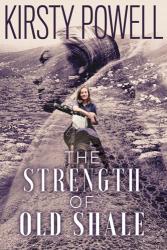
When bones of a mother and her child, wrapped in a Shetland lace shawl, are dug up from a forgotten graveyard, two worlds collide.
Ariel is raised on an isolated farm in New Zealand. She’s tough but when she’s blamed for an accident for which she has no recollection, her world implodes. Ariel seeks refuge back at university in Dunedin where she prefers the company of old gold-miners bones to real people.
Isbell is also tough and running from ghosts. As a young woman she has left behind depression times in Shetland and now makes her way from Ballarat, Australia to the New Zealand goldfields caring for 54 Cobb and Co coach horses in the hold of the SS India. The year is1861.
Is there a link between these two worlds, wrapped in that old shale?
Red River Road
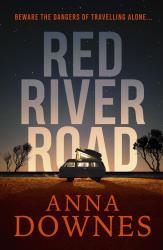
On the Coral Coast of Western Australia, solo traveller Katy is on a mission to find her free-spirited sister, Phoebe, who disappeared along the same route a year ago. But as she drives her campervan further into the wild north, Katy realises she's not as alone as she'd first believed. Soon she is pulled into a complicated web of secrets, lies, myths and stories that force her to question everything she thought she knew about her sister.
In this nerve-shredding outback thriller, our obsessions with freedom and beauty collide with our fear of what lies in the wilderness, and the truth behind Phoebe's disappearance proves stranger and darker than Katy could ever have guessed...
The Afterlife of Harry Playford
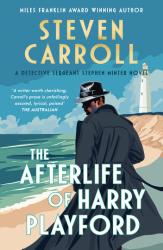
What does a pile of clothes left on a deserted beach tell you? It's a cold midwinter Monday. Seaweed and shells litter the flat expanse of sand. There is a light wind, the sea more disgruntled than choppy, the tide out. And there amongst it, the neat pile of clothes. Almost like a coded message waiting to be deciphered.'
Queenscliff, Victoria, 1951: A man has disappeared, leaving only a pile of neatly folded clothes on a beach. Missing, presumed drowned. But for Detective Sergeant Stephen Minter, newly emigrated from England, it's far from an open-and-shut case. Because this is no ordinary man. Harry Playford is a successful politician, a charming man who is a rising ministerial star, a possible contender for the top job, who leaves behind a beautiful wife - and a mistress. There could be a simple explanation. But, these murky days of the Cold War, in a time of rising mistrust and suspicion, spies and espionage, Stephen can't throw off his feeling that something's definitely not right. About the whole business.
A Beautiful Family
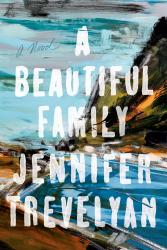
Over the course of one sunbaked summer vacation, a family is pulled into a web of mysteries that the younger daughter sets out to solve. A tense, page-turning debut of childhood, innocence, and evil.
At ten years old, she catches more than her parents and older sister suspect. Over their summer break, her mother plans to finish her novel, her father wants to grill and watch cricket, and her fifteen-year-old sister hopes to catch the eye of a local lifeguard. With everyone around her distracted, she teams up with a new friend to solve a mystery that haunts this vacation they'll close the case of what happened to Charlotte, a child who was presumed drowned two years earlier.
But things aren't quite as they seem, and as the children look for clues, they inadvertently dislodge information they wish they'd never uncovered. Are her parents happy together? Is her sister putting her trust in the wrong people? Is their vacation rental as safe as it seems? And when someone else goes missing, the family find themselves at the center of an urgent police investigation.
Debut novelist Jennifer Trevelyan viscerally captures the confusion and frustration of childhood, the fraught but unshakeable bond between sisters, and the dangers that lurk in the white lies we tell--especially about the people we love most.
A Beautiful Family, Jennifer Trevelyan
There's something almost mesmeric about A BEAUTIFUL FAMILY. A seemingly gentle story about a summer vacation in the mid 1980s, sunbaked, old fashioned, quiet, New Zealand based, told through the eyes of 10 year old Alix. It's a time of Walkman's, Dolly Magazine, cassette tapes, crosswords and jigsaw puzzles. Although there's an air of simplicity and innocence about all of this (and nostalgia for those of us who were there at the time), there's also something bubbling along under the surface.
Is it a distracted mother, trying to write a novel, or a distant father and the tensions between them? Is it the tension between two sisters, one content with her Walkman and the young boy she befriends who is also holidaying in the area, the older sister becoming more interested in makeup, friend groups and boys than the family is necessarily aware of? Or is it the slightly creepy neighbour, who is lurking around in the background?
Then there is the obvious mystery, the disappearance of young Charlotte in the same area a couple of years prior. A disappearance that young Alix and her friend Kahu are determined to solve. Which leads to some wonderful moments of family and community through the eyes of a child becoming aware of the imperfections of adults. We probably all remember the moment - a seemingly perfect father says something recognisably daft, a loving mother finds interests outside her children, a community seems unaware of the small things happening right in front of their eyes, which often leads to a more rapid growing up than somebody like Alix was originally expecting.
Cleverly presented as a gentle, almost lulling story, A BEAUTIFUL FAMILY prods away at family secrets, teenage rebellion, the kind of intense friendships that can be formed at young ages, sibling rivalries and adults behaving in a highly suspicious manner right in front of a lot of other adults seemingly content to ignore the implications.
Beware though, this is a story which doesn't end with all the threads neatly tied off, which, in the opinion of this reader at least, fitted absolutely perfectly with the entire style.
The Writers Retreat

A wickedly twisty and atmospheric thriller set at a writers' retreat in the South of France, The Writers Retreat is Knives Out meets Anna Downes’ The Safe Place from an exciting new voice in the thriller/mystery space.
Welcome to The Writers Retreat – a creative haven for writers to hone their plotlines and sharpen their characters while soaking up the Provençal atmosphere. But this year’s retreat offers something different, as real-life blurs with fiction, and suspense isn't contained to the page.
Kat Hale is a bestselling Australian author crumbling under the pressure of writing her second novel. On a whim, she has fled to a writers retreat in the South of France run by internationally acclaimed author Helen Thorne. What Kat hopes will be two blissfully uninterrupted weeks to focus on her writing in anonymity quickly turns into something more sinister, when Kat begins to suspect that Helen isn't quite as perfect as everyone seems to believe.
Will Kat’s drive to uncover the truth about Helen be any match for Helen’s desire to hold onto her career, her reputation and her writing retreat, or is Kat at risk of falling victim to a more dangerous climax?
Lucky Thing
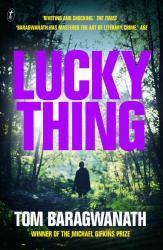
“The nights aren’t too cold yet, lucky thing. Otherwise we’d be having a different conversation.”
Jessica Mowbrie, beaten and dumped in the bush like a sack of garbage and lying comatose in a hospital bed: lucky to be alive.
Lorraine Henry doesn’t think Jess is so lucky. She thinks whoever hurt her needs to be hunted down. But the Masterton police are isolated and underresourced, and to be honest, even though Lorraine works for them, she thinks they’re a bit hopeless.
So it might be up to Lorraine to do the hunting. She’s not getting any younger, of course. But she has all the police records at her fingertips—and as much information about who hates who as anyone in Masterton. Plus, she’s used to being underestimated. And you should never underestimate a middle-aged woman with justice in her sights.
Lucky Thing, Tom Baragwanath
In Tom Baragwanath’s latest crime novel, Lorraine Henry knows only too well how small towns and close communities are a blessing and a curse.
Tom Baragwanath first introduced ‘Lo’ Henry in Paper Cage, a novel about a small but divided community and a string of missing children. In his latest release, Lucky Thing, Lo is back in a story again concentrating on the dangers that can impact younger people – this time teenagers dealing with petty jealousies, bullying, and partying, and the perils of attraction and social stigma. In a small town it’s easy to assume that because everyone knows who or what they are dealing with, kids should be safe.
A place like Masterton, it’s easy to slot someone away, categorised and neat. Trouble, or no trouble at all. Worth keeping an eye on, or not worth the worry.
While it’s definitely not necessary to have read the first book, Lo is an engaging character, and Paper Cage will give the reader a more complete understanding of how she fits into this place. Masterton is a small town in New Zealand, and Lo works as the files clerk for the local police, although her job has been getting more varied.
Mine has been quite the fluid job description lately. Fetching the biscuits for the staffroom, piecing together Dion’s spidery pages of notes into something the prosecutor’s office can read, covering the Chief’s updates to Head Office while he’s at Bunnings. Light child-recovery duties. And now, apparently, calls to next of kin.
Lo’s also in a unique position in the community. A Pākehā married into a Māori family, she is an insider and outsider in both communities. With no children of her own and her husband now dead after a workplace accident, she’s close to niece Sheena and Sheena’s young son Bradley. She’s used to dealing with young kids, recalcitrant teenagers, and tricky parents – she’s a sounding board for many in the community and the sort of woman who sees, hears, and figures out a lot.
Inside these wet eyes, a flash of colour passes in a brief moment of electricity. I’ve done this enough with Sheena, with Bradley. Shaking the brush and waiting for the bird.
The impending birth of Sheena’s new baby is the main thing on Lo’s mind until a young girl is found beaten and dumped in the cold bush. Jessica Mowbrie is lucky to be alive. But the next person isn’t so lucky, and the discovery of a body really stretches a police unit that’s under-resourced and physically isolated. Their commitment to finding who battered Jessica is unwavering, but the death means competing priorities take a lot of managing. For a force made up of boss Rick Ambrose, beat cop Dion, and a file clerk, it was already a big ask. Take Rick out of the picture due to a violent moment, and the stakes get higher.
The angle of the fall is all wrong, Rick’s arms pinned high and useless, his heavy torso coming down like a load of logs giving way. I move forward to reach him, but it isn’t enough; he hits the pavement, and his head strikes the sharpest edge of the camera.
The key to understanding why Jessica was battered, and the particularly chilling murder, comes down to the connections between people, the locations of events, and a lot of local knowledge. As with all small places, there are the monied few – landed gentry types, mostly white Pākehā families whose kids go to private schools, own a lot of land, and have a tendency to lord it over everyone. An attitude that is mirrored in the teenage community, with girls like Jessica and her cousin from working-class families trying to find a way to fit in with the ‘it’ crowd. As is often the case, the ‘it’ crowd are a bunch of bullies who are in too deep themselves. Not surprisingly, it’s Lo who hears a rumour that might explain some of the tension.
‘See what he knows about the debating club.’ I nod. ‘Apparently some of the Aquinas girls weren’t too keen on having Jessica there. He might have heard something.’
Baragwanath takes a deep dive into the nature of insider and outsider communities in Lucky Thing. Lo has always straddled the two worlds of Pākehā and Māori, landed gentry and working families. He expands that out with Jessica and her cousin, and the two young boys deeply involved in the story, Tāmati and Stu, all dealing with teenage angst against a background of those who have and those who have not so much. Then he takes that scenario right into a family who appears to have everything, and the past events that say a lot about who they are and what they stand for.
Maybe that’s the point of Lucky Thing – those who have everything may not be the luckiest people, because so much tangible ‘stuff’ was acquired by force or manipulation, and subsequent generations have struggled to hang onto it. Perhaps the lucky ones are those with a sense of community, family and connection. Not so tangible, not so easy to lose because of a momentary bad decision.
Add comment