In Jill Johnson’s new novel, Professor Eustacia Rose is done with murder – it’s time to settle down with the love of her life, Matilde.
For anybody new to this series, which began with Devil’s Breath, Professor Eustacia Rose is the Head of Botanical Toxicology at University College. An expert in rare and highly poisonous plants, she’s brilliant, neurodivergent, gay, and a very complicated person to be around. Luckily, her partner, Matilde, is patience personified, even if she is a little bit obsessed with home decorating – something that’s destined to discomfort Rose to the point of explosion, unless her failure to grasp the central premise of ‘done with murder’ drives Matilde back to Spain permanently first.
But I am not most people. I am Professor Eustacia Amelia Rose, Head of Botanical Toxicology at University College London. And I had chosen to walk through the arched entrance, and across the reception to the glassed-off area. I wasn’t here to make a complaint, or to report a crime, and I certainly wasn’t here to hand myself in. I was here because I’d received a phone call from Detective Chief Inspector Roberts not fifteen minutes before and it was imperative I find out why.
However, DCI Roberts – and others – seem to be more interested in finding a reason why they shouldn’t look into the death of a man from a plant toxin called gamma-coniceine. Despite his superiors’ tendency to regard Roberts and Rose as experts in the field of plant toxin murders, and Roberts’ reluctance, all hesitation is lost when Rose identifies the source of the poison as hemlock – one of the dangerous plants previously stolen from her rooftop garden – and the victim as somebody she’s recently been in very close contact with:
The man stepped out into the passageway. He was wearing a leather apron, the bulging pockets of which I assumed contained gardening gloves, secateurs, twine.
This series is currently made up of three novels: Devil’s Breath, Hell’s Bells, and Bella Donna, with a fourth, Blood Root,due for release in June 2026. It’s also a series that would definitely benefit from reading in order. Professor Rose is a complex woman with simple tastes and an incredibly complicated background. Raised mostly by her single father, whom she worshipped, she still wears his tweed suits and watch, and lives in the apartment they shared.
In the earlier novels she cared for a highly illegal and very dangerous rooftop garden full of illicitly obtained toxic plants, while also performing her role as Head of Botanical Toxicology. Her mother has also returned to her life after abandoning the family when Rose was very young, a relationship as fraught as you’d imagine after all these years. Roses’ neurodivergence manifests as extreme intelligence and laser-like focus on the things that interest her, but little ability, or desire, to interact with others – until things she started to see from her rooftop garden tempted her out into the world, and into the path of murderers with unique ways of killing. Many of these traits appear to circle back to her relationship with her father, and the world he built for his much loved daughter.
I lifted my eyes to the sky as a wave of shame rushed through me. I’d suffered panic attacks since childhood and only Father knew how to calm my racing heart, slow my rapid breathing, soothe away the panic. Only he knew that taking me for walks through the Oxford countryside, pointing out the different plants, teaching me their common and Latin names, patiently telling me about their properties, their toxicities, their folklore, would, as he’d called it, restore equilibrium. But Father was dead.
Her collection of rare plants was stolen as a result of one of the cases she was helping the police to investigate, and the latter novels have included the search to recover individual specimens, some of which appear to have fallen into the hands of organised crime gangs. It’s this background that readers may feel more comfortable understanding, as the links between Rose and the activities she walks straight into all come back to her single-minded determination to recover her beloved plants while not annoying her beloved Matilde – although that bit of human interaction is much much harder for her to deal with. To say nothing of how Rose deals with a new character on the scene – the exotic Zsa Zsa
Matilde let out a soft hum.
‘Should I be jealous?’
‘Of what?’
‘Of you finding a pretty plant for Zsa Zsa.’
I let out a guffaw.
‘That won’t happen.’
‘Why not?’
‘Because she isn’t pretty.’
On the contrary, Zsa Zsa is a very attractive and, it turns out, ruthless woman who is on the same trail as Rose, trying to recover some particularly dangerous plants. Meanwhile Rose and Matilde are navigating the complications of a relationship where one partner is trying hard to fit in with another determined to live their own version of a normal life. Meanwhile DCI Roberts is mostly trying to stay alive, and to stay out of the path of Professor Rose, who he admires and is driven insane by in equal measure.
The balance of Bella Donna is skewed slightly towards the personal relationships, with a number of threads from earlier novels being knitted into this story of organised crime and toxic plant murder. The initial victim, an intermediary that Rose had been in contact with before his death, has died very mysteriously, with no obvious ingestion of the poison that killed him. Subsequent murders have a more obvious cause, but the connections are vague, and the involvement of the gangs across multiple countries insidious and hard to unravel.
Nearly as hard to unravel, it turns out, as love and life. Something Professor Rose is continuing to struggle with, even as she proves herself again to be an intuitive solver of crimes.
Bella Donna
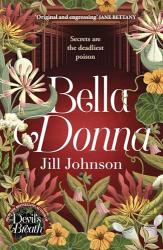
SECRETS ARE THE DEADLIEST POISON
Eustacia Rose is done with murder cases. She's ready to settle down with her partner, Matilde, and focus on her work at the university. To live a normal life.
But then along comes a case she can't resist investigating - because this time, the murder victim was poisoned with hemlock, one of the plants stolen from Eustacia's illicit garden of poisonous plants. And Eustacia is not the only one desperate to retrieve her lost the beguiling trader of rare plants, Zsa Zsa, and rival university professor Hutchins are on the trail, too, not to mention the dangerous criminal gang determined to keep hold of the lethal plants.
The stakes are higher than ever for Eustacia. Because if she cannot save her plants in time, there will be more deaths - and this time, the blood will be on her hands . . .
Add comment