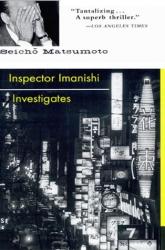
In the wee hours of a 1960s Tokyo morning, a dead body is found under the rails of a train, and the victim's face is so badly damaged that police have a hard time figuring out the victim’s identity. Only two clues surface: an old man, overheard talking in a distinctive accent to a young man, and the word “kameda.” Inspector Imanishi leaves his beloved bonsai and his haiku and goes off to investigate—and runs up against a blank wall. Months pass in fruitless questioning, in following up leads, until the case is closed, unsolved.
But Imanishi is dissatisfied, and a series of coincidences lead him back to the case. Why did a young woman scatter pieces of white paper out of the window of a train? Why did a bar girl leave for home right after Imanishi spoke to her? Why did an actor, on the verge of telling Imanishi something important, drop dead of a heart attack? What can a group of nouveau young artists possibly have to do with the murder of a quiet and “saintly” provincial old ex-policemen? Inspector Imanishi investigates.
Inspector Imanishi Investigates, Seicho Matsumoto
INSPECTOR IMANISHI INVESTIGATES is the first Japanese written crime / mystery book that I can remember reading for quite some time, and it must have worked as I've been tracking down other examples and other authors to try.
When an unidentified (and it soon appears) difficult to identify man is found under the rails of a Tokyo Station early one morning, he's been strangled and dumped on the rails - seemingly in an attempt to take away any further chance of identifying him when the first train of the morning ran over the corpse.
I'll admit it - I found Inspector Imanishi incredibly engaging. The style of language in the book is slightly formal - I guess partly because of the publication date (1961 for the Japanese version) and partly because it is Japanese - and they seem to be a considerably more formal people than what I'm used to. Rather than provide any form of dating for the book, it simply placed it formally in another culture - a culture considerably different from ours. There's the lovely ritual of exchanging name cards, there is the formal methods of addressing each other, there is even a formal courtesy to Imanishi's relationship with his wife which just appealed immensely.
The investigation itself proceeds very very slowly - this is 1967 after all and inquiries are frequently done in writing, in formal letters. Movement around the country is done by train, some inquiries are hampered by the destruction of records at the end of the Second World War. Sure there are some technological aspects - maybe these were glimpses forward to the technological giant that Japan has since become - but in some ways the mystery, while central to the plot, was less interesting than the characterisations, the Inspector, the food (I was consistently craving food throughout this book) and the tremendous sense of place.