Whole household is still a minor chaos machine - with himself going to be away for 4 days at the end of this week putting a dent in any reading plans. But I persist ....
Finished off:
The Ledge by Christian White (FINALLY! and worth the wait I can tell you)
Started on:
A Plot to Die for by Ardal O'Hanlan (listening)
Parrot Heaven by Jessica Howland Kany (FINALLY! enjoying this one)
The Picasso Ransom by A.T. Prewett (ebook whereas the other currently reading is a physical book so I don't always have it with me)
The Ledge

When human remains are discovered in a forest, police are baffled, the locals are shocked and one group of old friends starts to panic. Their long-held secret is about to be uncovered.
It all began in 1999 when sixteen-year-old Aaron ran away from home, drawing his friends into an unforeseeable chain of events that no one escaped from unscathed.
In The Ledge, past and present run breathlessly parallel, leading to a cliff-hanger nobody will see coming. This is a mind-bending new novel from the master of the unexpected.
The Ledge, Christian White
Christian White is an author who can always be relied upon to come up with an unusual scenario, great characters and a rollercoaster plot that will keep readers enthralled, and vaguely baffled from start to finish.
Told in dual timelines, THE LEDGE is a story that spans childhood friendship and old secrets haunting very different adult lives. Twenty five years before the current timeline of this novel, Justin, Aaron, Chen and Leeson were typical young boys growing up in a small regional town in the Victorian mountains. They ride their bikes, wonder about girls, all pretty normal, until a tragic chain of events that haunts them into their adulthood. An adulthood that for a few of them is very complicated.
Dual timelines are nothing new these days, and they come with varying degrees of success. This one is slightly on the jarring side, told as it is from a single point of view, with the constant suspicion that when the reader is inside one head, the view could be skewed or deliberately obfuscating.
To be fair though, that observation only came to this reader at the end because the suspense is palpable in THE LEDGE, as is an overwhelming atmosphere of dread and "something not quite right". Starting at the opening stanzas when the narrator of the story seems almost reluctant to reveal his separation from his wife and family complications, and the reason why, after the discovery of a long dead body in the bush, he is compelled to return to his childhood home town of West Haven.
The dialogue is, however, spot on, right from when the four young boys were firm friends, to the current day awkwardness of three re-uniting. From the interactions with ex-wives, old friends, and people from the town who remember them, and what's known about the events from their past. There's also a clever use of place - from the small town - to the railway line - leading to a hidden path to The Ledge. A rocky outcrop known to the locals, used for parties, and more sinister events, The Ledge hangs over the town, and the boy's lives like a living / breathing entity. White also uses these places - the town, the ledge, the railway line alongside the boys, then and now, to explore themes of friendship, loyalty, masculinity - positive and toxic, and the way that young men who grow up in small towns with tragedy can so often find it a struggle to deal with that.
Having said all of that White's not known as "the master of the unexpected" for no reason and even coming to THE LEDGE expecting something, looking for it even, the twist, when it arrived, came utterly out of nowhere.
I don't know why I always seem to be behind with reading Christian White's books - every single time I finish one I kick myself for not jumping it to the top of the queue immediately on release.
A Plot to Die For
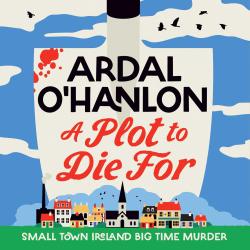
The first in a mystery series from the much-loved Irish actor, writer and comedian, for readers who enjoy the warmth of Graham Norton and the mystery of Death in Paradise , all wrapped up in one small Irish town.
When beloved celebrity gardener Finn O’Leary returns to his hometown of Abbeyford in Ireland to care for his aging mother, he is naturally roped into the Tidy Towns committee.
The Tidy Towns is a competition fanatically fought over by every town and village in the land. And for his best friend’s sister, Aoife, it’s a competition she’s determined to win. With everyone’s favourite gardener on board, she is sure that this year Abbeyford will take home the prize. But Finn’s not been back long when an alto-baritone at his mother’s choir practice drops dead during a rendition of ‘What the World Needs Now’.
With more at stake than just winning Tidy Towns, Finn soon finds himself trying to solve a murder – or two. For one of his many qualities is that people tend to confide in him…
With his mother, her carer and Aoife in tow, Finn sets out to discover just who has brought murder to Abbeyford.
A Plot to Die For, Ardal O'Hanlon
My sadly now deceased mother-in-law of Irish descent was a huge fan of a chat. Regardless of whether or not you were in the room when she started the story, had the slightest idea who she was talking about, or what on earth the point of the whole thing was. There was something about the cadence of her style that I was reminded of when listening to A PLOT TO DIE FOR, written and read by Ardal O'Hanlon. Who I must admit I know of mostly from his work as a stand up comedian and then his turn as the central detective on Death in Paradise.
The blurb for this mentions it's for readers who enjoy the warmth of Graham Norton and that show in particular, and I have to admit I selected it from my audio queue mostly because of the potential of the accent. Which was lovely to listen to, made the rambling byways and side shuffles of the whole story worth every listening minute.
A cosy style mystery, with the deathly seriousness of a Tidy Towns competition at its heart, the main characters in this one are celebrity gardener Finn O'Leary, his aging mother, her carer, his mildly batty father, and a whole lot of people in a small town that if Finn didn't go to school with them, there was a very close relative involved. Like his best friend's sister, Aoife, the other "main" character in this tale which involves some murdering, a lot of vandalism, and the deadly serious and very closely followed Tidy Towns competition. There's a spot of gardening, a lot of personal stuff, some really funny dialogue, and a bit of romance. And I cannot tell you how grateful I was for a recent QI episode because one character deploys "Dundee" quite a bit and I knew exactly how disparaging that is, why and where it came from.
Highly recommended in audio format, for the gentle distraction and bit of fun (craic?) that this whole thing provided, I do hope they do another in this series. Finn and Aoife were lovely to take along on the endless car journeys.
Parrot Heaven
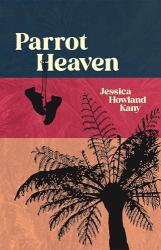
BDTH! The Foveaux Fisherman Facebook page posts this acronym to advise Rakiura Stewart Islanders to ‘batten down the hatches’ before severe weather events.
New Zealand’s southernmost librarian Maudie Sanderson reckons this warning could be applied to her life in general these days.
Haunted by a parrot and falsely accused of soliciting d**k pics, Maudie navigates a minefield of rabbit holes and mental health crises as she struggles to be a fit and proper person in a pandemic-hungover world. Sidelined by buggered knees, the avid runner needs projects to maintain sanity.
Island life keeps her busy. Maudie is drawn into an axe cult, scraps with the preschool teacher, discusses The Epic of Gilgamesh in a jailhouse book club, and mis-manages a community astronomy course. When a shocking crime wreaks havoc on her family, she dons her deerstalker cap and dives into the investigation.
All the while, Maudie feels a growing kinship with the ancient desert king Gilgamesh, as the words from 5,000-year-old clay tablets guide her through life’s myriad of mysteries.
Parrot Heaven, Jessica Howland Kany
Because I'd read (and loved) A RUNNERS GUIDE TO RAKIURA by Jessica Howland Kany first I was prepared for PARROT HEAVEN. Which was handy because the slightly chaotic styling of the first novel is ramped up even more in this one - to frequently hilarious levels, although anybody new to this series may just wonder what the actual... .
If you're in that space, stick with it. This is crime fiction (in that there is some crime sprinkled throughout), but it's mostly storytelling about a place, some people, and a life that's, well different, probably doesn't come close to explaining it.
If you need to know more about who Maudie and Vil are, along with many of Vil's extended family, and the slightly batty residents of New Zealand's Rakiura Stewart Island, as seen through the eyes of outsider Maudie, then I'd strongly suggest that you check out what details you can glean from the first book. Whilst it won't be necessary to have read the earlier to launch into this second outing it may help, but then again, if you're the sort of reader that can't settle into chaos then nothing may help.
Short synopsis first - Maudie and Vil, now married, with a couple of young kids are getting on with small island / wild weather / mad community life quite well - albeit haunted by the death of their beloved parrot, and the havoc wreaked by Bathmat the goat. Life with a toddler is proving somewhat of a challenge that Vil mostly meets by sitting in a bathchair on the lawn looking at nothing in particular while Maudie texts him little gems like "is our girl batshit?", and the goat eats his phone, and his divorced parents remarry treating their guests to a wedding cake full of wormholes (you'll have to read the book), and his father (referred to throughout as Dogbox) is charged with murder.
Of course nothing's as simple as a bit of a murder charge (which also comes such a long way into the book that you might be wondering if this thing has been mislabelled by then), there's also an axe cult, The Epic of Gilgamesh, a particularly mismanaged community astronomy course, and the local pub quiz. Meanwhile as the murder (yes it is sort of still in there), threatens to wreak havoc on the family, Maudie steps into conduct her own investigation - buggered knees, missing prosthetic toes (first book - or you'll work it out here), and surprisingly literate, but frankly vaguely batshit crazy, toddler daughter, son, fisherman husband Vil, mother-in-law, madhouse community and all.
Written in a slightly chaotic style of short paragraphs, flow shifts, funny observations, lunatic conversation ploys, mad people and crazy goings on, PARROT HEAVEN is so far from traditional crime fiction that familiar territory is so much further than a packed lunch and waterbag will take you. This is the journey is more important than the destination reading, although to be honest the journey seemed to have thrown the map and compass into the nearest tidal pool. All of which matters not a jot - get the sense of humour and gentle love for this community at the core of these books, and a reader is in for a hell of a ride.
The Picasso Ransom
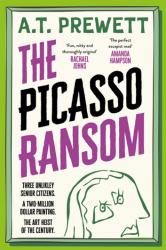
'Can we try escaping just a little slower?'
Fact: In 1986, Picasso's Weeping Woman was stolen from the National Gallery of Victoria. To this day, the culprits have never been identified.
Here's what happened.
Maybe.
Phoebe is about to turn 70, and has grown sick of retirement. She enrols in an evening art course, where she befriends fellow retirees Eva and Dave. They also happen to be studying across the road from a two-million-dollar Picasso.
The trio make a promising start, only to find that the school is to be closed due to arts cuts implemented by a blundering government minister. The protests of a student activist group - under 30s only - fall on deaf ears.
The Picasso Ransom, A.T. Prewett
Back in 1986 I wouldn't have had as much understanding of the opening line of this blurb as I do have today, as 70 year old Phoebe and her two similarly aged friends Eva and Dave are escaping from the back of the arts school near the National Gallery of Victoria, stolen painting in hand:
'Can we try escaping just a little slower?'
Nowadays I get it 100%. As would a lot of us who distinctly remember, and were in Melbourne, at the time of the real life heist of Picasso's Weeping Woman. (At this point can I highly recommend Marc Fennell's investigative TV series - Framed, which the author of this fiction based on real life story mentions in his acknowledgements).
As the blurb puts it - Fact: In 1986, Picasso's Weeping Woman was stolen from the National Gallery of Victoria. To this day, the culprits have never been identified.
The culprits at the time referred to themselves as the Australian Cultural Terrorists, and their demands were about the lack of funding for the Arts in Victoria, including some massive (abusive alas but funny with it), of the then Minister for the Police and Arts (I kid you not), Race Matthews. The names of the main players - the Minister, the Head of the National Gallery of Victoria etc have all been changed in this novel, but it will be very very easy for readers of a certain age to instantly recognise the bouffant hairstyles, and the flamboyant dress senses of some of the then main players.
The idea that three retiree art students - Phoebe, Eva and Dave - are the real perpetrators is, one assumes, a work of fiction, but there was something gloriously appealing about the idea that somebody of a certain age could hide out in a major cultural institution, luck out on moving around the gallery dodging a couple of older security guards, find the right sort of screwdriver, snaffle a painting worth a few million, and stroll out of the building with it, all on a whim. There is also something very telling about the age gap between the "right on student activist group" who spend a lot of time talking about what they want to do, whilst actively rejecting the older three as too old to be anything but plants. All the while it's the older ones who have actually done something very radical about the funding cuts, and the threat to their beloved art school.
THE PICASSO RANSOM is cleverly done - being based on a still unsolved real life case - the author has had the opportunity to mix the known in with speculation in a way that makes the whole story sing. Having created three terrific central characters helps as well, although Phoebe is the star of the show. An older woman who has spent her life being conventional until retirement from teaching, a divorce, and the realisation that her life has devolved into nothing much, enrols in art school to follow a lifelong passion for painting, only to find herself in a situation she would never, ever have dreamed of. In her personal life, her criminal endeavours and her future.
This book is quite an undertaking, enormous fun, hugely entertaining and cleverly constructed, it also has that little kick in the messaging - about age, capacity and openness to new experiences. Filled with references to Melbourne in the late 1980's when it was still fun, vibrant, slightly chaotic (or at least it seemed that way to me at the time - not so now), this is serious mum, when it wasn't (TISM reference - read the novel).
Add comment