
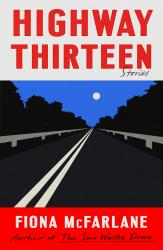
A gripping, haunting work about the reverberations of a serial killer's crimes in the lives of everyday people.
In 1998, an apparently ordinary Australian man is arrested and charged with a series of brutal murders. The news shocks the nation, bringing both horror and resolution to the victims' families, but its impact travels even further—into the past, as the murders rewrite personal histories, and into the future, as true crime podcasts and biopics tell the story of the crimes.
Highway 13 takes murder as its starting point, but it unfolds to encompass much through the investigation of the aftermath of this violence across time and place, from the killer's home town in country Australia to the tropical Far North, and to Texas and Rome, McFarlane presents an unforgettable, entrancing exploration of the way stories are told and spread, and at what cost.
What damages, big and small, do these crimes incur? How do communities make sense of such atrocities? How does the mourning of families sit alongside the public fascination with terrible crimes? And can we tell true crime stories without putting the killers at the centre of the story?
Highway 13, Fiona McFarlane
A group of short stories, this a both gripping, and incredibly clever crime fiction, set within a scenario that will be familiar to some Australian readers.
The central premise of this collection is the reverberations of a serial killer's crime in the lives of ordinary people. The connections are both unexpected and more obvious, but the impacts less predictable, and sometimes disconcertingly random. Each story provides a glimpse into the way that one person's actions create an outward ripple effect, how complicated connections can be, and more importantly, how chance plays such a big part in so many lives.
The central connection is that in 1998 a quintessentially "he was so quiet" man was arrested and charged with a series of brutal murders, all connected to a stretch of road, and a bush setting where bodies were found (and may not have all been located). The news of this shocked the nation, devastated a lot of victim's families, and then, out through his own family, neighbours, friends, and random people who had somehow crossed paths with a serial killer.
Taking those murders as their starting point, each of the stories in HIGHWAY 13 touch on a variety of different points to these murders - from the killer's rural home town, across Australia, and out through the world as people grow up together, or meet, love, marry, separate, work, and simply go about their lives. Sometimes curious about the murders, sometimes unaware of the past or their futures (thank goodness for that one).
Ultimately these stories are a favourite part of crime fiction for this reader - consequences, and for a series of short stories, they are breathtaking in their wideness of scope and intent.
As the blurb puts it:
What damages, big and small, do these crimes incur? How do communities make sense of such atrocities? How does the mourning of families sit alongside the public fascination with terrible crimes? And can we tell true crime stories without putting the killers at the centre of the story?