
Karen Chisholm
REVIEW
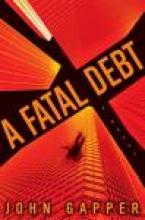
A FATAL DEBT - John Gapper
Reviewed By
Friday, December 7, 2012
The problem with setting fictional books within real life events is that you seem to run the risk of alienating readers who aren't particularly interested in the subject, environment, or even the event itself. Particularly when the subject matter is something that could be perceived as a bit dry or more than a bit outside the average person's own experience. Hands up to being one of those people - financial system crashes, financier's behaving badly, guaranteed to have me humming The Girl From Ipanema loudly and looking for the closest exit.
Luckily I don't often pay a lot of attention to book blurbs and the next one that pops up on the Review Queue will be the one I at least have a go at reading. Half a dozen chapters in and the urge to go looking for a bit of detail about the author's background became quite overwhelming because A FATAL DEBT was shaping up to be extremely engaging. Gapper is chief business commentator and associate editor of the Financial Times and a regular on the BBC and CNN. His previous books are non-fiction discussions of real-life financial disasters. He has now written a very good thriller.
It won't be surprising at all if those with more financial world knowledge are able to match up the circumstances and the people to real life versions, as it was difficult to ignore the sneaking suspicion that there's some facts behind the storytelling. It will also not be particularly surprising if that level of recognition makes absolutely no difference whatsoever to enjoyment levels of the book. A FATAL DEBT worked particularly well for a reader with absolutely no idea who anybody could be based on, nor what particular High Finance scandals were recognisable.
Part of what makes that work so well is avoiding making the central protagonist a financier. Instead Attending Psychiatrist Ben Cowper is dragged into that world via his very high profile patient. It's not until Cowper's in way too far, and things have gone very wrong for investment banker Harry Shapiro that Cowper realises he's stepped right into a very deep hole, that may actually have been dug with intent. This device cleverly allows the author quite a few opportunities to explain the world to the fictional outsider, allowing the reader to eavesdrop on the clarifications. Allows the reader to learn a few things along the way without having to feel like the only neophyte at the altar of High Finance.
Of course the book is styled as a thriller, and there has to be a bit of action, a few lurking villains and a bit of romantic tension. The big difference is that in A FATAL DEBT the action isn't all energiser bunny and over the top heroics and the lurking villains have expensive tastes in suits and transportation methods. Perhaps the romantic interest could have been shelved in the "oh no not that old chestnut" drawer as it didn't contribute a whole lot to a plot that was, overall, a refreshingly excellent look at the world of white collar crime.
BOOK DETAILS
BOOK INFORMATION
BLURB
Ben Cowper, an attending psychiatrist at the prestigious New York–Episcopal Hospital, is stunned to learn the identity of the emergency patient he’s just been assigned to treat: Harry Shapiro, a Wall Street colossus and one of Episcopal’s most prominent donors. But a high-profile reversal of fortune has left the once powerful investment banker jobless, bitter, and possibly desperate—judging by the handgun his wife finds him clutching. In Ben’s expert opinion, Shapiro is a suicide waiting to happen. But when the headstrong financier baulks at an extended stay in the hospital psych ward, Ben reluctantly releases him, bowing to political pressure from Episcopal’s chief administrator, who’s more concerned with the patient’s money than his mind.
Days later, the shocking news breaks: There’s been a shooting death in Harry Shapiro’s Hamptons mansion. But even more shocking is the identity of the victim. A tragedy sets in motion an explosive chain of events that turns Ben Cowper’s life upside-down.
As hard-nosed cops close in with harder questions, the hospital closes ranks to protect its own interests. But with colleagues freezing Ben out, innocent circumstances conspire to incriminate him. Hounded by a DA who’s out for blood, and haunted by the spectre of a shattered career, Ben has no choice: He must delve into the hearts and minds of the people who know Harry best, uncover the secrets they’d rather die—or kill—to keep, and expose the truth behind a web of malice disguised as madness.
| Review | A FATAL DEBT - John Gapper | Karen Chisholm
|
Friday, December 7, 2012 |
| Blog | CR - A Fatal Debt, John Gapper | Karen Chisholm
|
Sunday, November 25, 2012 |