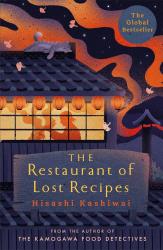
We all hold lost recipes in our hearts. A very special restaurant in Kyoto helps find them . . .
Tucked away down a Kyoto backstreet lies the extraordinary Kamogawa Diner, run by Chef Nagare and his daughter, Koishi. The father-daughter duo have reinvented themselves as “food detectives,” offering a service that goes beyond cooking mouth-watering meals. Through their culinary sleuthing, they revive lost recipes and rekindle forgotten memories.
From the Olympic swimmer who misses his estranged father’s bento lunchbox to the one-hit-wonder pop star who remembers the tempura she ate to celebrate her only successful record, each customer leaves the diner forever changed—though not always in the ways they expect . . .
The Kamogawa Diner doesn’t just serve meals—it’s a door to the past through the miracle of delicious food. A beloved bestseller in Japan, The Restaurant of Lost Recipes is a tender and healing novel for fans of Before the Coffee Gets Cold.
The Restaurant of Lost Recipes, Hisashi Kashiwai
Why I have really enjoyed the audio versions of the first two books of this series (The Kamogawa Food Detectives is the first, this is the second) could, on the face of it, look like an even bigger mystery then the central premise of these books, which is a man and daughter who bring to life the food memories of their customers with a few clues and maybe some geographical locations as a starting point. What's less of a mystery is just how thoroughly enjoyable they are, if not slightly annoying because frankly the food descriptions makes me hungry every single time.
Perhaps it's the final part of the blurb that explains this the best "a tender and healing novel that celebrates the power of community and delicious food". There's also something quintessentially "Japanese" about these stories, with their polite restraint, their rejoicing in food, and their acknowledgement and awareness of the subtle differences in flavour, culture and tradition. It's perhaps that which appeals the most to this amateur foodie who takes coeliac disease and vegetarianism as a challenge, rather than a limitation. It's the idea of the challenge, the tracking down, the testing, tasting and finageling of memories into recipes, of connection to past and good and difficult memories, that makes sense in any culture, but feels just like the sort of thing that fits right into Japanese sensibility.
The audio version, narrated by Hanako Footman, is a pleasure to listen to, and highly recommended as a lesson in, if nothing else, menu Japanese (who knew I'd been pronouncing Wasabi so incorrectly for so very long).