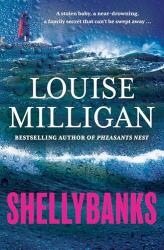
On the sands of Shellybanks, where tides can quickly turn treacherous, journalist Kate Delaney once nearly drowned. Years later, reeling from a violent crime that has upended her life in Melbourne, she returns to Dublin to comfort her beloved aunt Dolores—only to discover Dolores has her own buried trauma.
As a teenager, Dolores was drawn into a disturbing religious movement that stole her youth, her freedom, and so much more. With Kate's help, she is determined to confront the powerful network that made her endure years of silence and shame.
Shellybanks is a haunting tale of secrecy and survival, charting how two women find strength in each other as they reckon with Ireland's hidden histories and the scars that endure across generations.
Shellybanks, Louise Milligan
Following up very closely behind Milligan's debut novel PHEASANT'S NEST, SHELLYBANKS features the same main character, journalist Kate Delaney, and many of the same themes - violence and abuse of women, the PTSD and long-term affects of that on victims, and those that love them.
Whilst it's absolutely not necessary to have read the first book in the series, as there are plenty of throwbacks to the shocking and traumatising events in Delaney's life, it would also help to understand the depths of the PTSD and trauma she, and her much loved partner Liam are experiencing, and the challenges they are both facing in trying to move on with their lives. It's during an extended break away in Greece that they are called by Kate's beloved aunt Dolores, at home in Ireland, where after many many years of single life, she was nearly at the point of marriage to a much loved man. Only he has suddenly discovered a terminal illness that kills him pretty quickly, and Dolores needs Kate's support. Flying into Dublin what starts out as a supporting role for a grieving woman, quickly becomes an investigation into the abuse and trauma inflicted on Dolores when she was young, that Kate never knew about.
As is often the way with stories of the abuse of young women and girls, the full extent only comes to light at a later time in the survivor's life, in this case, as a result of the trauma of losing the man she loved, and the close connection between an Aunt who was a mother figure in many ways, and a niece who has her own godawful burden to bear. It's the shared experience that seems to give these two women the ability to a) reveal and b) deal with the events that happened to Dolores many years before, when she was drawn into a deeply abusive religious movement that inflicted physical and sexual abuse on its victims, and seems to still be operating in some capacity today. Maybe even more confronting because it's a movement of women, inflicting such cruel suffering on other women, including the stealing of babies and an illegal adoption racket.
To be honest by the time you get to the story of Siobhan, a young woman, adopted out as a child, it's a relief to know she got out, lived a relatively normal life, and survived. All the women who stayed within the orbit of a woman known as the "Directress" were most definitely the unlucky ones. Which gets us to the core of this book. This is a book about abuse and suffering. Much of the content of the stories of Dolores, and the references back to what happened to Kate are extremely confronting and downright distressing at times.
The style of writing is matter of fact, almost stilted on occasions, perhaps reflecting a reluctance to be party to the telling, to revealing just how bloody awful people can be. Regardless of the reason though, there are parts of this book that are absolutely a hard slog. For this reader, it was the story of Siobhan that struck me as a point of redemption in an odd sort of way. She had loving, albeit smothering adoptive parents, she had a life and the chance to be who she wanted to be, and it was her very existence that led to the downfall of awful people and an awful system.
Delaney works as an investigator who is utterly committed to these sorts of stories, and the use of the slightly lighter, albeit determined and dedicated cop in Christy Redmond works as a counterpoint. Although to be fair, Delaney's not trying to be likeable or understandable, she's as confronted by her PTSD, by the events that happened in the first novel as the reader is going to be. She's damaged, and Liam is struggling, but it's in Dolores and her relationship that you see shared experience triumphing over all.
Recommending a book like this is always going to be a difficult undertaking. It's a story that absolutely needs to be told. The telling of it's hard and the experience of reading about it confronting. It's one of those crime novels that takes something very broken and lights it up as brightly and as clearly as it possibly can. Warts and all.