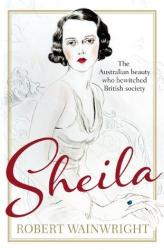
Sheila wedded earls and barons, befriended literary figures and movie stars, bedded a future king, was feted by London and New York society for forty years and when she died was a Russian princess.
Vivacious, confident and striking, Sheila Chisholm met her first husband, Francis Edward Scudamore St Clair-Erskine, a first lieutenant and son of the 5th Earl of Rosslyn, when she went to Egypt during the Great War to nurse her brother. Arriving in London as a young married woman, the world was at her feet - and she enjoyed it immensely. Edward, Prince of Wales, called her 'a divine woman' and his brother, Bertie, the future George VI of England (Queen Elizabeth’s father), was especially close to her. She subsequently became Lady Milbanke and ended her days as Princess Dimitri of Russia. Sheila had torrid love affairs with Rudolph Valentino and Prince Obolensky of Russia and among her friends were Evelyn Waugh, Lord Beaverbrook and Wallis Simpson.
An extraordinary woman unknown to most Australians, Sheila is a spellbinding story of a unique time and a place and an utterly fascinating life.
Sheila, Robert Wainwright
There's a slightly obvious reason for being attracted to this novel, way outside my normal reading preferences. The story of a young Australian woman who arrives in England just before the outbreak of the First World War, ends up in Egypt working with injured soldiers during that war, marries a Lord, returns to England and promptly inserts herself into the upper echelons of English Aristocracy, right up to the Royal Family themselves, becoming good friends with the young Princes, and ultimately having an affair with the future George VI.
It's a piece of social history, that is sometimes absolutely fascinating and informative, and at others a long drawn out recital of names names names (with the obvious hat-tip to Ab Fab). When it's delving into the life and times, and even into the connections between the well-known, the Aristocracy and the strictures and nuances of society it's interesting, although a little more detail would have been preferable. When it's simply a bit gossipy, encumbered by a tendency to refer to names and titles that didn't necessarily call any particular significance to mind, it did become tedious.
One that you can, however, dip in and out of as mood permits, which is ultimately how this reader finished it eventually. A chapter or two at a time, when untaxing reading was required.